Remote Work Burnout: The Specific Habit Driving It
By BrioMon Team
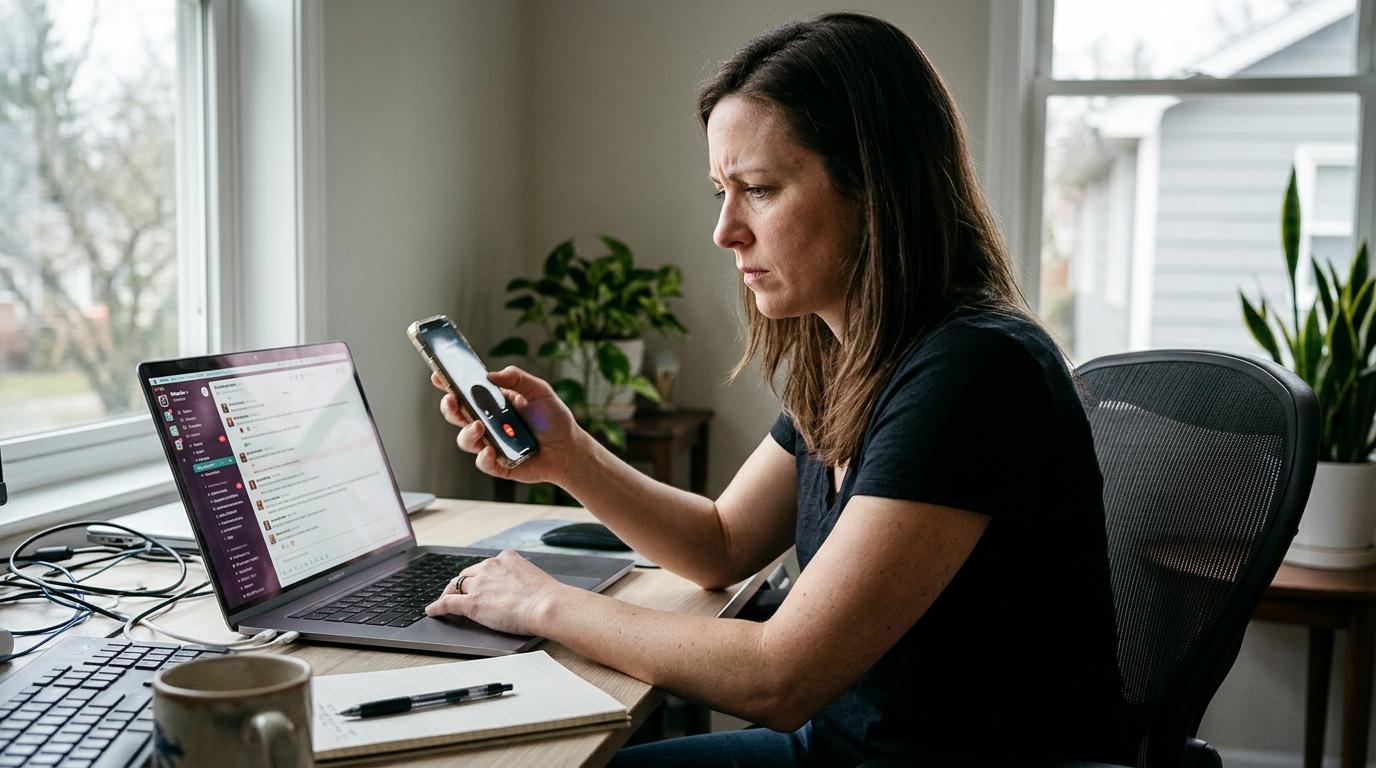
Remote work burnout usually gets blamed on isolation, or a blurred line between home and office. Those are real factors, but research on a more specific habit, the urge to respond to messages immediately, points to a more precise mechanism: it isn’t being away from the office that drains people, it’s feeling obligated to be reachable at all times once the office stops being a place and becomes a notification.
The concept: “telepressure,” not just busyness
Researchers studying workplace communication identified and measured what they call telepressure, a preoccupation with messages combined with an urge to respond to them quickly, regardless of whether the message is actually urgent. In an original workplace study, employees with high work-related telepressure reported significantly more burnout, more trouble staying focused, more health-related absences, and worse sleep quality than employees with lower telepressure, independent of how many hours they were actually logging.
Why remote work raises the stakes on this specific habit
In an office, physical presence does some of the work of signaling availability: someone visibly at their desk is reachable, someone visibly gone is not. Remote work strips that signal out. Reachability becomes entirely a matter of whether a device is on and whether a message has been answered, which means the pressure to respond quickly has nothing left to counterbalance it. The habit telepressure describes, already shown to predict burnout and poor sleep in an ordinary office setting, loses its natural brakes once work moves home.

Why this isn’t the same thing as working long hours
This matters because it reframes what “fixing” remote work burnout actually requires. Reducing hours worked doesn’t directly address telepressure, since someone can work a perfectly reasonable number of hours and still carry a constant, low-grade urgency about every notification the entire time they’re not working too. The research found telepressure predicted these outcomes somewhat independently of raw workload, which means a shorter official workday doesn’t automatically undo the habit if the underlying expectation of instant responsiveness stays in place.
What actually drives the urge to respond instantly
The pattern isn’t purely personal. It tracks with perceived social norms, whether a workplace culture implicitly rewards fast replies, alongside individual factors like lower self-control and a stronger fear of missing out. That combination matters for anyone trying to fix it at the individual level alone: someone can practice better boundaries personally and still be pulled back into the pattern by a team culture that treats a slow reply as a problem, a dynamic closely related to the nervous-system effects covered in how remote work changes your nervous system.
Why this needs an organizational answer, not just a personal one
If telepressure is partly a response to perceived norms, the fix has to include what the norms actually signal, not just what an individual decides to do with their notifications. A written policy saying replies can wait until tomorrow does little if the unwritten expectation, reinforced by who gets praised and who gets quietly flagged as unresponsive, says otherwise. Remote teams serious about reducing burnout have to address both layers at once.

Why this shows up as burnout rather than just annoyance
Telepressure doesn’t feel dramatic in the moment. It feels like a small, reasonable habit: checking a message quickly, clearing a notification before it piles up, staying responsive because that’s what a good colleague does. The research is what reveals the cumulative cost of that habit repeated constantly across a workday that no longer has a physical edge to it. A single quick reply costs nothing. A standing, all-day readiness to produce one, every time a device lights up, is a sustained background load, which is exactly the kind of thing that shows up months later as burnout rather than as an obvious complaint in the moment it’s happening.
Why MCMS treats always-on pressure as a trackable input
This is exactly why Mental Capacity Management treats the always-on pressure of remote and hybrid work as a specific, measurable input rather than folding it into a vague category of “remote work stress.” The Mental Capacity Management System (MCMS™) reads capacity over time through the Mental Capacity Assessment Engine (MCAE™), so a pattern of sustained telepressure-driven strain can be flagged and addressed directly, independent of whether someone’s actual logged hours look reasonable. The organizational case for building that kind of visibility into a remote or hybrid team is laid out in how to build the business case for Mental Capacity Management.
If it’s your own capacity you want to actually start managing, Request a Trial, and see whether the real drain is the hours you’re working or the urgency you’ve attached to every notification outside them.
If it’s your team’s performance you’re responsible for, Request Access, and see whether your team’s unwritten norms are quietly working against the boundaries your policy claims to support.