How to Combat Anxiety: What Meditation Actually Does
By BrioMon Team
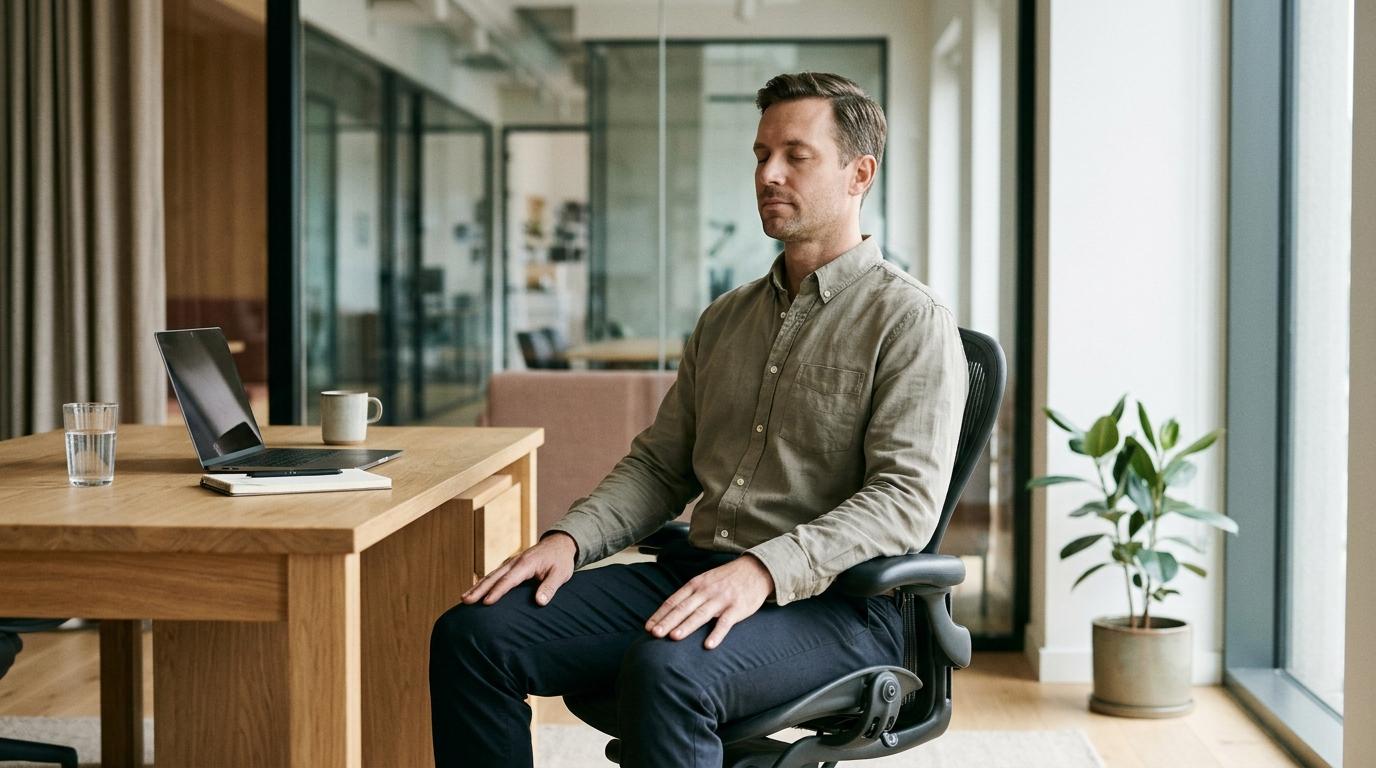
How to combat anxiety almost always leads to the same suggestion: meditate. It’s good advice, but the research behind it is more specific, and more modest, than the way it usually gets repeated. A major meta-analysis pooling dozens of randomized trials found meditation genuinely helps with anxiety, and also found it’s not the standout solution it’s often marketed as.
The study: pooling 47 trials, not one popular program
A systematic review and meta-analysis combined 47 randomized controlled trials covering 3,515 participants, specifically evaluating meditation programs against active control conditions, not just against doing nothing. Of those, a smaller subset, eight trials, reported anxiety outcomes directly, giving the researchers a focused look at what meditation does specifically for anxiety rather than stress or well-being in general.
What the data actually found for anxiety
Meditation programs showed a real, moderate-evidence improvement in anxiety compared to nonspecific active controls, with a modest effect at eight weeks that declined somewhat by three to six months. The researchers themselves characterized these as small effects. That’s a genuinely useful finding: meditation isn’t a placebo for anxiety, and the improvement shows up in controlled comparisons, not just self-report. But small and real are both true at once, which matters for anyone expecting meditation alone to resolve anxiety the way some popular coverage implies.
The finding that gets left out of most advice
The same analysis compared meditation directly against other established active treatments: exercise, progressive muscle relaxation, and cognitive behavioral group therapy. Meditation didn’t outperform any of them. The evidence for meditation beating these alternatives was low or insufficient, and the trials themselves weren’t large enough to even establish that meditation works just as well as these options, only that it wasn’t shown to be better. This is the part that rarely makes it into popular advice: meditation is one effective option among several, not a uniquely superior one.
Why this actually makes the advice more useful, not less
Knowing meditation isn’t singularly more powerful than exercise or structured cognitive techniques is genuinely helpful information, not a disappointing footnote. It means someone who finds meditation difficult, boring, or simply doesn’t stick with it isn’t missing out on the one real solution. Exercise and structured cognitive approaches are evidence-backed alternatives sitting in roughly the same tier, not consolation prizes for people who “can’t meditate.” The right question isn’t which technique is objectively best. It’s which one someone will actually do consistently, since the research doesn’t give a strong reason to force a mismatch between the person and the practice.
What realistic expectations should look like
Given a small-to-moderate effect that fades somewhat over months, meditation works best treated as one component of an ongoing approach to anxiety, not a single intervention expected to resolve it completely and permanently after a short course. The data supports starting it, sticking with it, and pairing it with other evidence-backed approaches rather than treating it as the finish line. Anyone combating anxiety by meditation alone, expecting a dramatic and lasting shift, is working from an expectation the actual trial data doesn’t support.

Why this fits into a bigger pattern than any single technique
Treating meditation as one tool in a broader toolkit, rather than a cure on its own, connects to the wider research on what actually builds someone’s capacity to handle anxiety-provoking situations over time, covered in more depth in cognitive resilience: what the research actually says about bouncing back. The trials on meditation specifically are consistent with that broader picture: no single practice, done in isolation, reliably produces the kind of durable change people hope for from anxiety advice. A combination, chosen for fit and sustained consistently, does better than any one technique treated as the whole answer.
Why MCMS treats this as one input among several, not a fix
This is exactly why Mental Capacity Management doesn’t prescribe a single universal technique and call anxiety solved. The Mental Capacity Management System (MCMS™) reads capacity over time through the Mental Capacity Assessment Engine (MCAE™), so whether meditation, exercise, or a structured cognitive approach is actually moving someone’s pattern toward Steady can be tracked directly, rather than assumed from a popular recommendation alone. The organizational case for supporting a range of evidence-backed approaches rather than a one-size answer is laid out in how to build the business case for Mental Capacity Management.
If it’s your own capacity you want to actually start managing, Request a Trial, and see whether the technique you’ve committed to is actually moving your pattern, or just the one everyone recommends.
If it’s your team’s performance you’re responsible for, Request Access, and see whether a single wellness recommendation is doing the work the data says it can realistically do.